
The short version: keep the heating at a low background temperature during a cold spell, lag exposed pipework, protect or drain the outside tap, and find your stopcock before you need it. These small checks can help prevent the disruption of a burst pipe or a boiler that will not start.
In Portsmouth, the vulnerable spots are often a loft, garage, outside tap, kitchen extension or an external boiler condensate pipe. A period terrace, a converted flat and a newer home can all have different pipe routes, so start by looking for the parts of the system that sit outside the heated areas of the property.
Why pipes freeze
A pipe can freeze when the air around it stays at or below 0°C for long enough. There is no single temperature or number of hours that applies to every home: draughts, insulation, pipe material, water movement and the warmth of the room all make a difference. Lofts, garages, external walls and outside taps are usually first at risk because they are less protected by heat from the house.
As water freezes, it expands. That can put pressure on a weak point, joint or fitting. The leak may not show until the ice thaws, which is why it is worth treating an overnight freezing forecast as a prompt to check exposed pipework rather than waiting for a problem.
Where to check first
- Outside taps and their feeds: use a weatherproof cover, or isolate and drain the tap where the pipework allows.
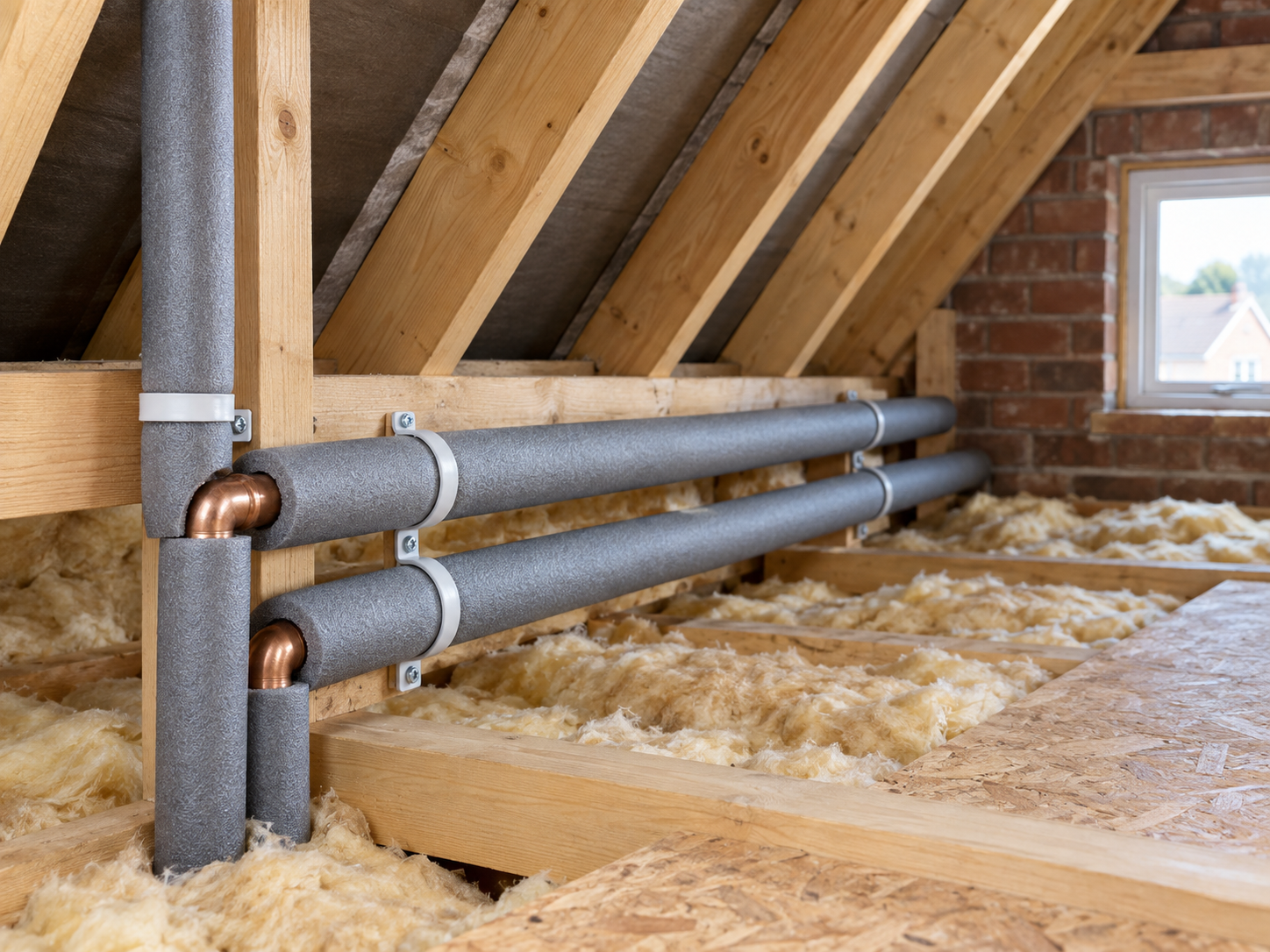
- Loft pipes and cold-water tanks: lag pipes and use a proper tank jacket. Do not bury pipes under insulation in a way that cuts them off from warmth below.
- Garages, utility rooms and extensions: insulate exposed runs and look for draughts around pipe entries.
- Pipework behind kitchen units or on an outer wall: check beneath sinks and in cold voids where insulation may be missing.
- External boiler condensate pipes: follow the accessible route and look for an unprotected or repeatedly freezing section.
A practical winter checklist
1. Find and test the stopcock
Tell everyone in the household where it is. In many homes it is under the kitchen sink, under the stairs or in a service cupboard. Turn it gently to check that it moves, then return it to its normal open position. If it is seized, arrange for it to be looked at before winter rather than forcing it during a leak.
2. Lag exposed pipework
Use split-tube foam lagging sized for the pipe, commonly 15 mm or 22 mm copper. Cover bends and fittings as well as straight runs, and replace damaged coverings or corroded clips. If you have found a leaking or damaged section already, a pipe repair assessment is safer than relying on lagging as a temporary fix.
3. Protect the outside tap
Fit a weatherproof tap jacket. If your system has a suitable internal isolation valve and drain point, isolating and draining the outside feed before winter offers more protection. Do not leave a tap running in the hope that this will prevent freezing; it can create a different problem if pipework below it freezes.
4. Keep background heat during a cold snap
Do not switch the heating off completely during freezing weather. For a normal short absence, a low background setting of around 12 to 15°C can help protect hidden pipework. A frost setting may be suitable for some homes, but check that it is actually configured and that the boiler instructions support the setting you choose.
5. Check loft insulation and draughts
Insulate the loft floor and tank while allowing household warmth to reach vulnerable pipes where practical. Make sure the tank lid fits, close obvious draught paths and inspect the areas around pipes entering the loft or an external wall.
A frozen boiler condensate pipe
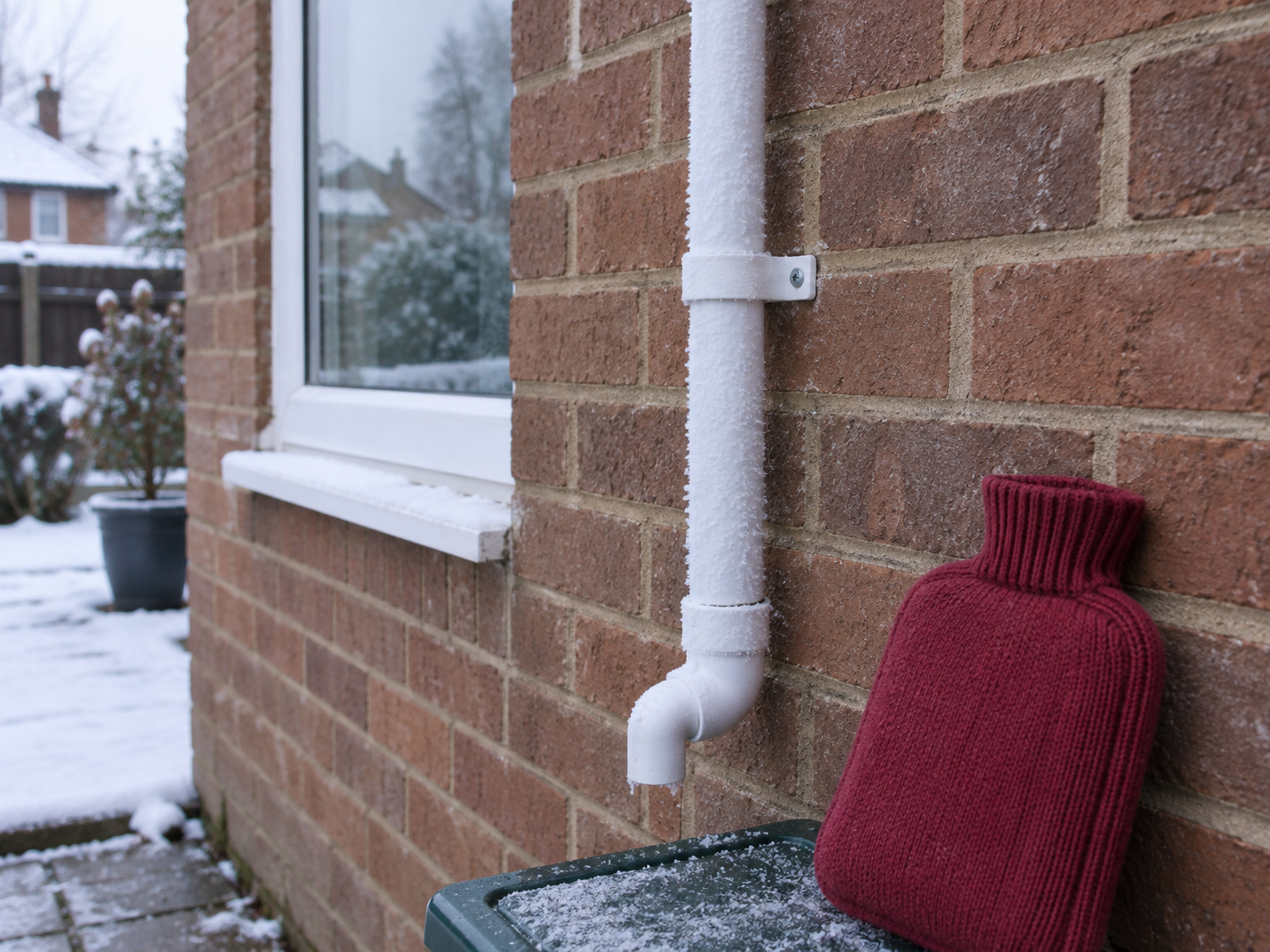
Condensing boilers send waste water through a condensate pipe to a suitable drain. If an external section freezes, the boiler may lock out even though the appliance itself is not faulty. You may notice a fault code, no heating or hot water, or visible frost on an accessible external plastic pipe.
How to thaw it safely
Only deal with an accessible external plastic condensate pipe. Use warm, not boiling, water, a hot-water bottle or a warm cloth, then reset the boiler in line with its manual. Do not remove the boiler casing, use a naked flame, use boiling water or use a hair dryer. If you smell gas, cannot safely reach the pipe, or the boiler does not restart after a reasonable thaw, stop and seek help from an appropriately qualified engineer. For an appliance fault or a recurring condensate problem, see the boiler repair service.
For a permanent solution, the route, fall, pipe size and the boiler manufacturer's guidance all matter. A recurring freeze may need more than a thicker sleeve, so it is worth having the installation assessed rather than changing pipework by guesswork.
If a pipe has frozen or burst
Act promptly but do not put yourself at risk. If water is escaping, the first aim is to isolate the supply and protect people and property.
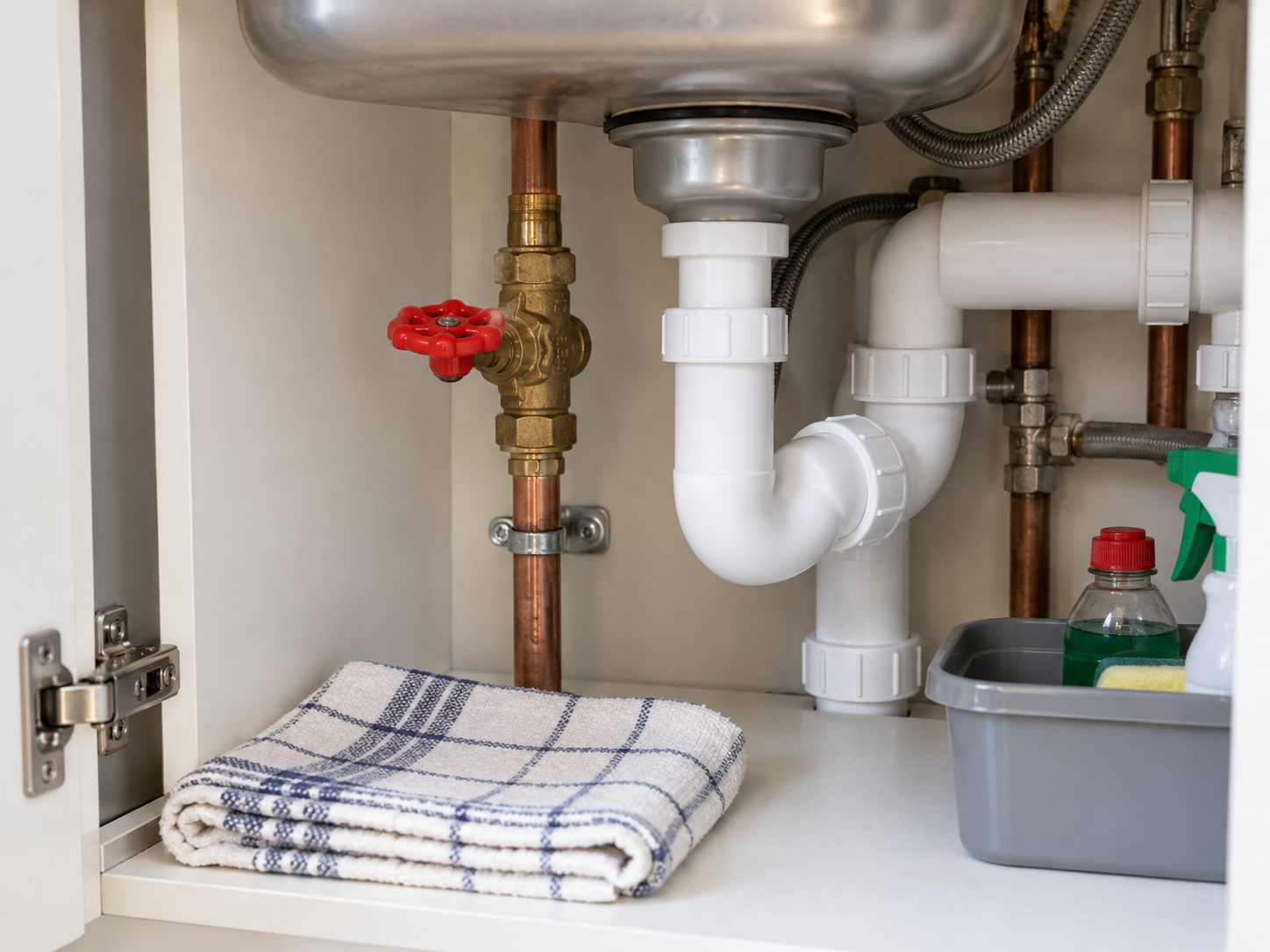
- Turn off the stopcock. Shut off the water supply if it is safe to do so.
- Turn off the boiler and any immersion heater. Do not let equipment continue running while the system may be drained or leaking.
- Open taps. This helps relieve pressure and can drain the system after the water is off.
- Contain the water. Use towels and buckets, and move possessions away from the affected area.
- Make electrics safe. If water is near a socket, fitting or appliance, only turn off the power at the consumer unit if it is safe to reach. Otherwise keep away and seek appropriate emergency help.
- Take photographs. Once people are safe, record the leak and damage for your insurer and plumber.
Do not use a naked flame, blowtorch, boiling water or a hair dryer to thaw a pipe. Do not turn the water back on until the pipework is confirmed intact and dry: a split can reveal itself only when pressure returns. For urgent help with a burst pipe, use the emergency plumbing service.
Going away over Christmas or winter
For most short breaks, leave the heating on a low background setting rather than switching it off. A property with a garage, loft tank, outside tap or exposed condensate route needs an extra check. If the home will be empty through a forecast cold spell, ask a trusted neighbour or friend to check in where possible. For a longer absence or a system with repeated freezing, ask a plumber whether a planned drain-down or a frost-protection solution is appropriate.
Frequently asked questions
At what temperature do pipes freeze?
Pipes can freeze once the air around them stays at or below 0°C long enough, especially in an unheated loft, garage, outside wall or outside tap. Insulation, draughts and heat loss all affect how quickly that happens.
Can frozen pipes burst?
Yes. Ice expands as it forms and can split a pipe or weaken a joint. The leak may appear only when the pipe thaws, so isolate the supply and inspect carefully before restoring water.
Is lagging enough to stop pipes freezing?
Lagging slows heat loss but cannot guarantee protection on a completely unheated or badly exposed run. Combine it with background heating, outside-tap protection and a proper assessment of any recurring condensate problem.
Get ahead of the next cold spell
A planned check can identify exposed pipework, worn lagging, a difficult stopcock or a vulnerable condensate route before temperatures fall. Premier Plumbing Portsmouth serves homes across Portsmouth, including Southsea, and the surrounding area. To discuss a planned visit, contact the team; if the problem is happening now, use the emergency-plumbing route above.