
Portsmouth plumbing advice
Blocked Drain in Portsmouth: Is It a DIY Job or Time to Call a Pro?
A practical guide to spotting a local blockage, trying safe first steps, and knowing when the problem needs proper diagnosis.
Published 25 September 2026 · Premier Plumbing Portsmouth
A gurgling shower or a slow kitchen sink after a wet weekend in Southsea is not always an emergency. For a single fixture, a plunger and hot, not boiling, water are often sensible first steps. A blockage that keeps returning, affects several fixtures, or comes with foul smells and gurgling needs a different response: stop escalating the DIY and arrange an inspection.
This guide explains the warning signs, the safer checks you can make at home, and when to contact a drain cleaning specialist. It is general guidance rather than a diagnosis, and active sewage backup or flooding should be treated as urgent.
How to tell if a drain is blocked
Common signs include a sink, shower or toilet draining slowly; gurgling from a nearby unused outlet; a foul smell from a plughole or gully; water rising in a lower fixture when a higher one is used; and standing water in an outside gully or inspection chamber.
One symptom at one fixture may be a soft, local blockage. Several symptoms together suggest that the shared run, lateral drain or a point further downstream needs professional diagnosis.
Use the three-warning-sign rule
Stop treating the problem as a simple DIY job if any of these patterns appear:
- The blockage returns soon after it has been cleared.
- More than one fixture is affected at the same time.
- A foul smell and gurgling happen together, especially from an outlet you are not using.
Two or more signs together make more force or more chemicals a poor next step. The cause could be grease build-up, roots, a damaged or bellied older pipe, or a restriction further along the run.
Safe first steps for one slow fixture
Only try these checks when there is no sewage backing up, no active flooding and no sign that several fixtures share the same blockage.
Plunger and hot water
Half-fill the fixture so the plunger cup can seal. Cover an overflow opening with a wet cloth, then use firm, controlled strokes. Follow with hot, not boiling, water. Stop if the water rises, another fixture reacts or the trap appears damaged.
A small hand auger for an accessible waste
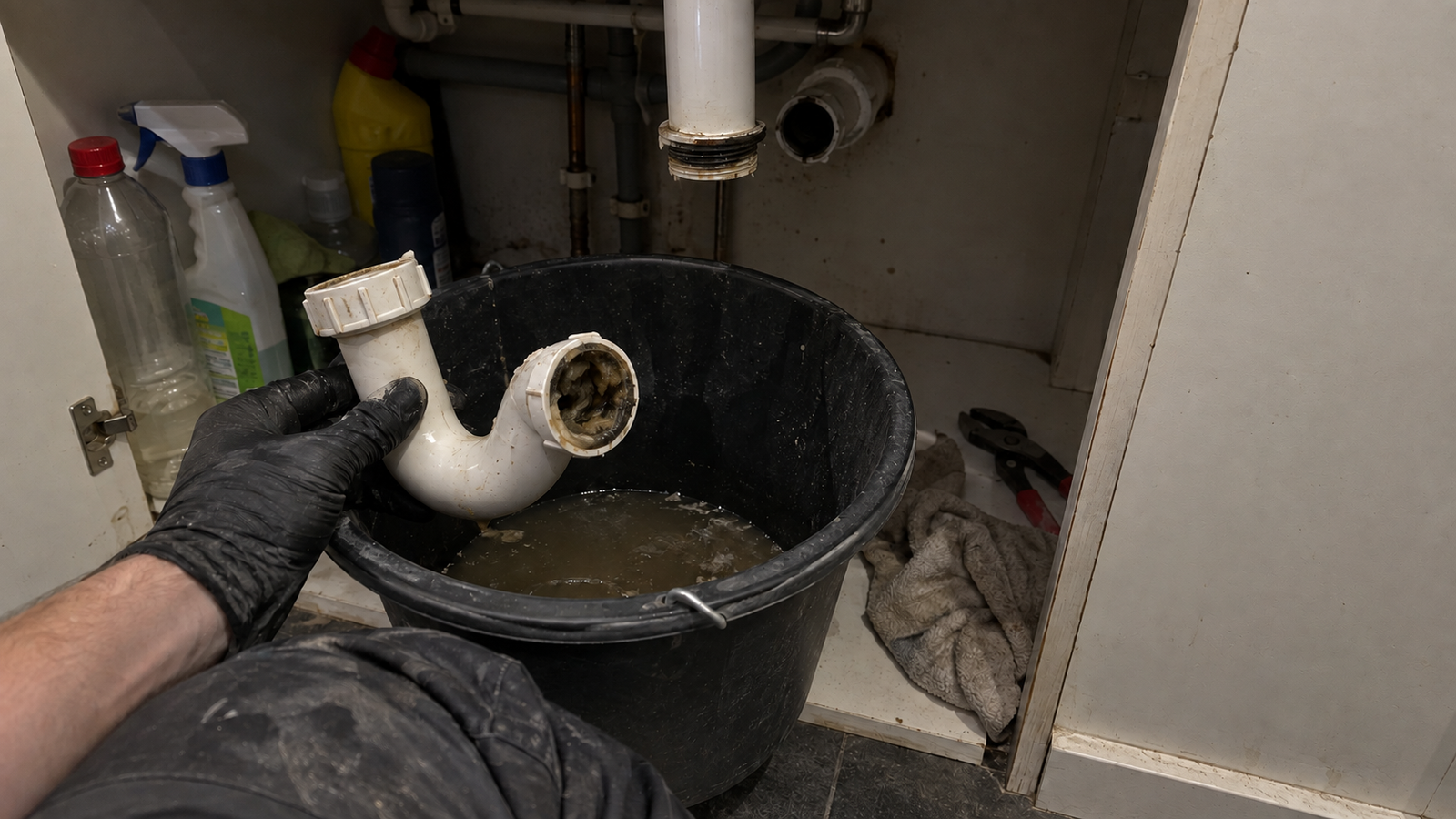
A hand auger can help with visible hair or a small local obstruction in an accessible sink or shower waste. Wear gloves, feed it gently and withdraw debris rather than forcing it deeper. Do not use a general-purpose auger on a toilet or unknown outside pipe route.
What to do about a blocked outside gully
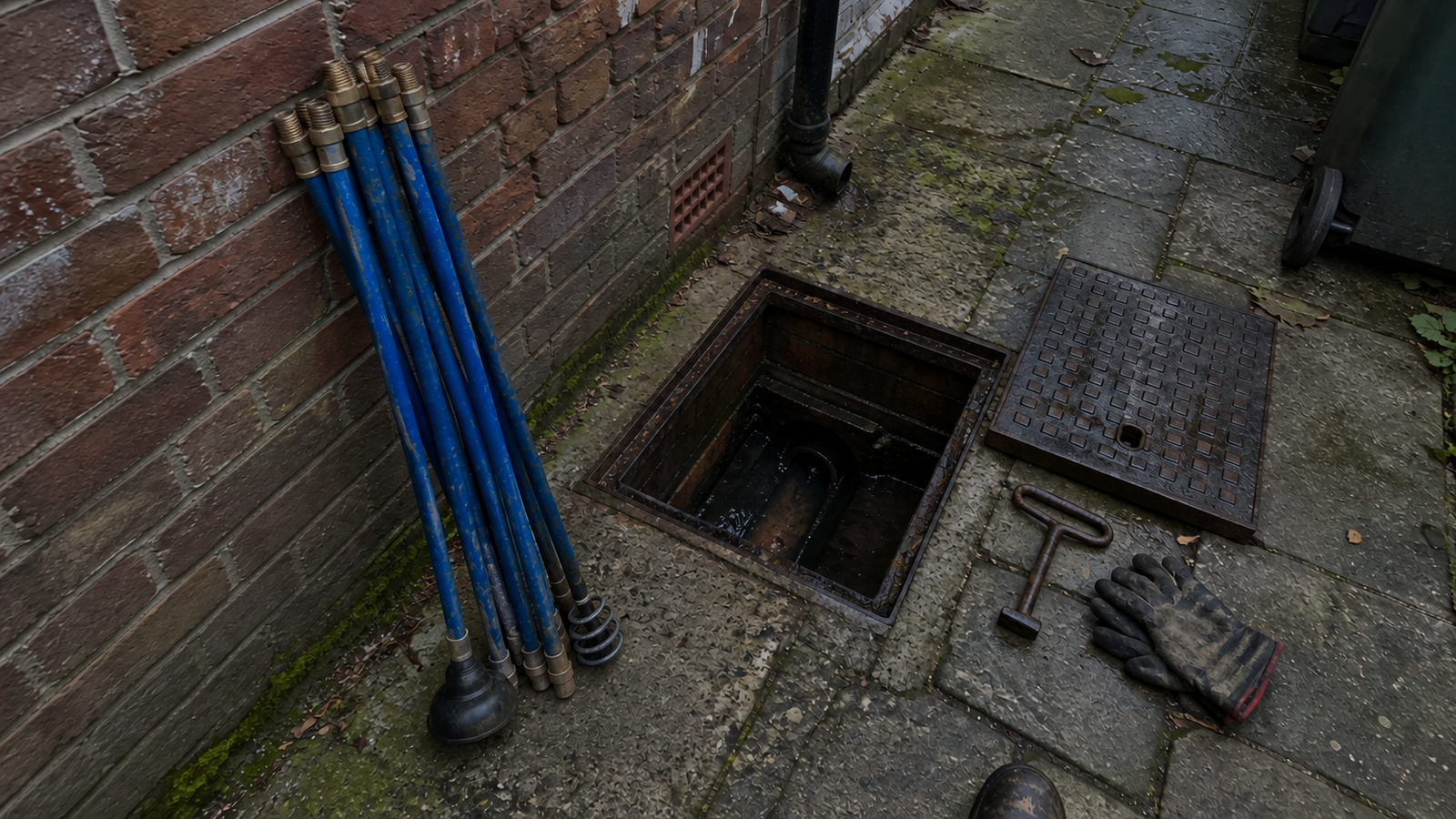
Leaves and silt can restrict a safe, ground-level gully, particularly in autumn. If you can do so without leaning into a chamber, wear gloves, lift only a safe grate, remove visible debris and flush gently from above. Keep children away and replace the grate securely.
Do not enter a manhole, climb into an inspection chamber or force a rod into an opening you do not recognise. If the gully refills, the chamber is standing full, or water is moving back towards the house after heavy rain, arrange a professional check.
Who is responsible for a blocked drain?
Responsibility depends on the exact pipe, its boundary position and whether it serves one property or several. A private drain serving only one home within its boundary is commonly the owner or landlord's responsibility. Shared drains and some lateral drains connected to the public system may fall under the sewerage company's responsibility, but the position should be checked rather than assumed.
For Portsmouth properties, use Southern Water's current drainage guidance and the GOV.UK private sewer transfer information as starting points. A neighbour's garden, a shared lateral or a private pumping arrangement can change the practical answer. Buildings insurance may also cover some escape-of-water damage, subject to the policy and insurer's decision.
What causes blocked drains in Portsmouth homes?
Fats, oils and grease are common kitchen causes. In bathrooms, hair and soap residue build up around traps. Wipes, sanitary products and cotton buds belong in the bin, even when packaging describes an item as flushable. Outside, leaves and silt can reduce gully capacity, while older clay runs may be vulnerable to root ingress, movement or collapse.
The useful question is not which chemical to buy first. It is whether the blockage is local, recurring or shared. That distinction determines whether a simple clearance is appropriate or whether jetting and CCTV diagnosis are more sensible.
How to prevent another blockage
- Let cooking fat cool, scrape it into a container and put it in the bin.
- Use a shower hair strainer and clean it regularly.
- Put wipes, sanitary products and cotton buds in the bin.
- Clear accessible gully grates twice a year, especially in autumn and spring.
- Keep inspection covers accessible and avoid landscaping over them.
- For HMOs and busy premises, record repeat reports and consider planned cleaning or a survey.
Should you use chemical drain unblocker?
Strong chemical products are not the default answer. Caustic or acidic ingredients can cause serious burns, and standing water can make the next mechanical attempt more hazardous for you or an engineer. Never mix products, use them on suspected sewage backup, or pour them into an unknown older pipe run. For a slow, still-flowing waste, a safe mechanical check is usually more useful; for a repeat blockage, book diagnosis rather than escalating chemicals.
Landlords and HMOs
A drainage fault that causes sewage exposure, persistent damp, pests or loss of essential sanitation needs prompt attention. Tenants should report the issue quickly, while landlords should record the report, make the property safe and arrange an appropriate repair or follow-up survey. The exact legal position depends on the facts and severity.
Blocked drain questions
When should I call a plumber?
Call when a blockage returns, more than one fixture is affected, foul smells and gurgling happen together, sewage is backing up, or an outside chamber is full. Active flooding or sewage exposure should be treated as urgent; contact emergency plumbing support where appropriate.
Can I clear an outside drain myself?
You can remove visible leaf litter from a safe, ground-level gully if the chamber is accessible and there is no sewage exposure. Do not enter a chamber, use a pressure washer down an unknown route or keep rodding when the blockage is recurring.
How do I know whether a shared drain is involved?
If several fixtures react together, the restriction may be beyond one appliance or within a shared run. Check the current sewer map and reporting guidance, and ask for a clear explanation of what was found before agreeing to repair work.
Can a landlord ignore a blocked drain?
A serious drainage fault should not be ignored because it can affect sanitation, damp and health. Report it promptly and keep a record of the response. The appropriate repair depends on the condition, the property and the severity of the hazard.
Book a Portsmouth drain inspection
If one local blockage has cleared safely, you may not need a callout. If sewage is backing up, water is flooding, the blockage keeps returning, several fixtures are affected or an outside chamber is full, contact Premier Plumbing Portsmouth or call 07401 471852. We serve Portsmouth and surrounding areas including Southsea, Cosham, Havant, Emsworth, Waterlooville and nearby communities.
Get Your Plumbing Sorted Today
For careful, straightforward plumbing support in Portsmouth, speak with a local team that takes the time to understand the job. Contact us today to arrange your free estimate.
07401 471852Or fill out the form — we'll be in touch shortly.